
The Fear of Becoming a Burden: Rediscovering Worth in Old Age
A geriatric counseling case study on an elder's fear of being a burden; how dignity therapy helped a retired teacher reclaim identity and self-worth.
 Rachmanas Counseling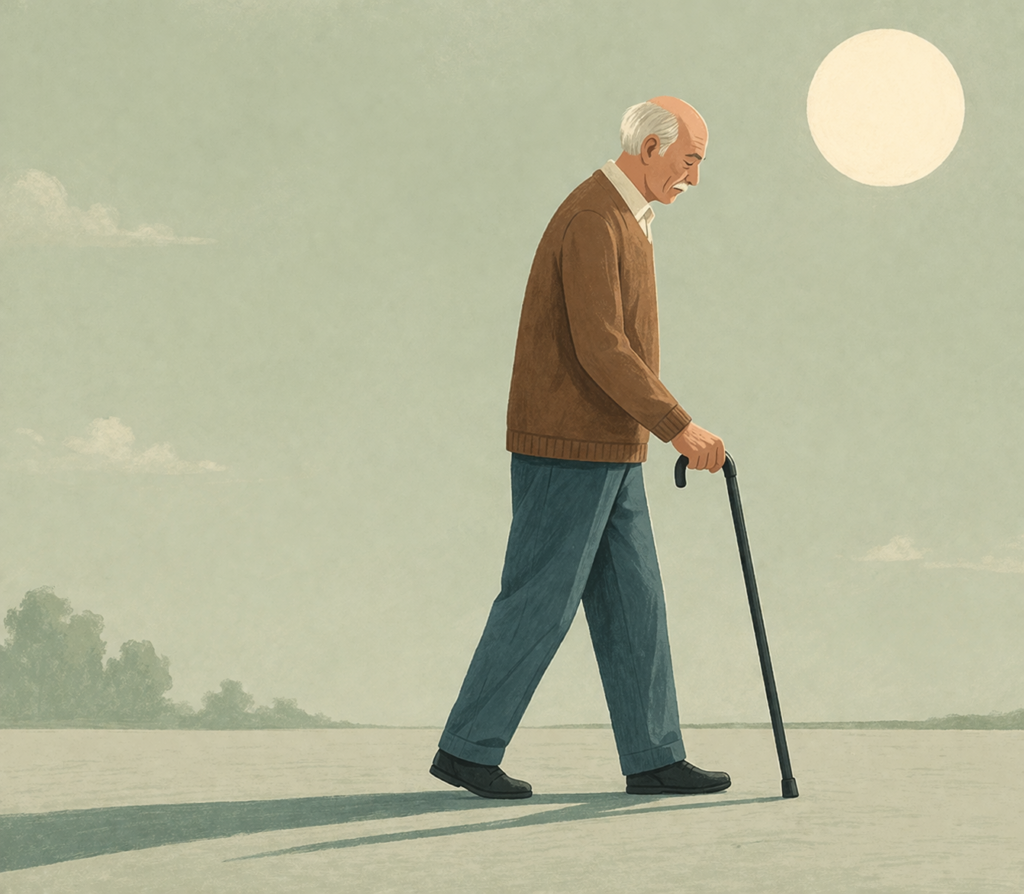
A geriatric counseling case study on an elder's fear of being a burden; how dignity therapy helped a retired teacher reclaim identity and self-worth.
Rachmanas Counseling Ramesh Sagwan (name changed), a 72-year-old retired government school teacher from Indore, began geriatric counseling at Rachmanas after his son reached out for support. His son had noticed something quiet but worrying: Ramesh was pulling away. He stopped mentioning his knee pain. He skipped doctor visits entirely.
When family members asked if he needed anything, he waved them off with “Main theek hoon” (I am fine), even when it was obvious he was not.
Ramesh had spent 35 years teaching Hindi to children from working-class families at a government school in Indore. His work gave his days shape and purpose. After retirement, that structure was gone.
He woke up early out of habit but had nowhere to go. He ate smaller portions; not because he lacked appetite, but because he did not want to “add to anyone’s load.” Family conversations happened around him rather than with him.
The World Health Organization estimates that over 7% of the global elderly population lives with depression, with social withdrawal among the earliest and most common signs (World Health Organization, 2023).
In joint Indian families, elders often mask their distress to preserve household harmony, making it harder to identify the problem and delaying support.
The geriatric counseling process began with Ramesh completing a Personal Information Questionnaire (PIQ) before his first session. Over the first two sessions, the counselor conducted individual interviews to understand his daily routine, family relationships, self-perception, and how his thinking had changed since retirement.
These conversations were unhurried. Ramesh spoke carefully, as if measuring how much he could safely say.
The Geriatric Depression Scale (GDS-15) was used as a structured screening tool (Yesavage et al., 1983). His score placed him in the moderate range. He did not call his experience depression. He called himself “extra baggage.”
His core belief was clear: his worth was entirely tied to his usefulness. Retirement had removed his primary role. Without it, he felt he no longer had a right to ask for anything. Beck et al. (1979) identified this kind of thinking as a cognitive distortion; specifically, “personalization” combined with “all-or-nothing thinking.” Ramesh believed that needing care, rather than giving it, was a moral failure.
The counselor drew primarily from Dignity Therapy (Chochinov, 2012) and Person-Centered Therapy (Rogers, 1951). The goal was not to correct Ramesh, but to help him recover a sense of worth he had slowly come to believe he deserved.
Lambert (2013) notes that the quality of the therapeutic relationship is among the strongest predictors of positive counseling outcomes; this relationship became the foundation of the work.
The geriatric counseling work unfolded across 10 sessions over three months, each lasting 50 minutes and conducted online.
Person-Centered Therapy (PCT)
Carl Rogers (1951) held that people heal when they experience unconditional positive regard; when they feel fully accepted without having to earn it. The counselor began by doing very little except listening. No advice was offered early. No reframing was imposed. When Ramesh said, “Main kya kaam ka hoon ab?” (What use am I now?), she stayed with that question rather than rushing past it. She reflected his words back without judgment.
By session three, the dynamic shifted. Ramesh began speaking more freely. He recalled students he had helped through difficult exams, lessons that had excited him, and small moments from his career that still made him proud. Being heard without being told what to feel gave him permission to come forward.
Dignity Therapy
From sessions four through six, the counselor introduced Dignity Therapy, developed by psychiatrist Harvey Chochinov (2012) as a structured, short-term approach for older adults that focuses on meaning, legacy, and personal narrative. It centers on guided questions designed to surface what a person values most, what they want to be remembered for, and what they hope to pass on.
The counselor asked Ramesh: What are you most proud of in your life? What do you want your family to truly understand about who you are? What lessons have you lived that still matter?
These questions did something that advice could not. They moved Ramesh from asking what he could still do to remembering who he had always been. During session five, he wrote a short letter to his grandchildren. It took him two days to complete. When he read it aloud in the session, he said, “This is the most useful thing I have done in a long time.”
Narrative Therapy
Sessions seven and eight introduced narrative therapy, rooted in the work of White and Epston (1990). Narrative therapy helps people externalize their problems; to see them as something that attaches itself to their story rather than something that defines who they are.
The counselor helped Ramesh trace where the “burden belief” had originated. He surfaced a specific memory from early in his career: his father had fallen seriously ill, and Ramesh had borrowed money from a colleague to manage the medical expenses.
The shame of that moment had never left. He had spent decades ensuring he would never put anyone in that position on his account. Now, needing care himself, that old vow felt like a life sentence.
By naming this belief and examining its source, Ramesh began to separate it from his identity. It was not who he was. It was a story he had carried for fifty years without ever questioning it.
Mindfulness-Based Reflection
The final two sessions incorporated brief mindfulness-based reflection practices. Khoury et al. (2013), in a comprehensive meta-analysis, found that mindfulness-based approaches significantly reduce depressive symptoms and improve emotional regulation in older adults. The counselor guided Ramesh through a short, daily breathing practice he could return to each morning. He reported it helped him “stay in today, instead of worrying about what I have become.”
By session eight, Ramesh had scheduled and attended a doctor’s appointment for the first time in over a year. He went without being reminded or accompanied.
By the final session, he was joining family dinners again. He had started asking his grandchildren about school. His daughter-in-law noticed he had stopped apologizing simply for being present.
In session ten, he said: “Mujhe lagta tha ki main sirf kaam ki wajah se acha tha. Ab samajh aa raha hai ki main pehle insaan hoon.” (I thought I was only good because of my work. Now I understand I am a person first.)
A second GDS-15 administration in session nine showed a measurable drop; his score moved from the moderate range into the minimal range. Sleep improved. Appetite returned. He described feeling “lighter.”
Challenges remain. Asking for help directly is still uncomfortable for Ramesh. But he now recognizes the pattern when it shows up and is building the habit of naming it rather than disappearing into it. Wampold and Imel (2015) note that counseling’s power lies not only in technique but in the relational environment that makes honest self-examination possible. Ramesh’s progress reflects this clearly.
All identifying information has been changed to protect confidentiality. Ramesh gave informed consent before geriatric counseling began, including consent for this anonymized case write-up. The counselor stayed alert to her own cultural assumptions about aging, dependence, and family roles throughout the process. This case was handled in line with the APA Ethical Principles of Psychologists and Code of Conduct (American Psychological Association, 2017).
Ramesh’s story is not rare. In India, and in many cultures where strength is tied to self-sufficiency, aging can quietly become a kind of performance. The elder learns to make himself small before anyone asks him to.
For someone like Ramesh, who built his adult life around the identity of being a teacher and provider, the loss of that role at retirement felt like losing the only thing that justified his presence.
This is a pressure that does not end when a profession ends. It simply changes shape, and for elders in demanding, service-oriented careers, it can intensify precisely because their whole sense of self was wrapped inside that role.
Geriatric counseling creates something rarer than people think: a space where an older person’s voice matters not because of what they can contribute, but because they exist.
When that space is offered with genuine warmth, people begin to talk. They return to their own stories. And sometimes, like Ramesh, they discover that the life they had quietly grown ashamed of is actually the one worth being proud of.
Counseling works. And it is never too late to begin.

 Turning Workplace Strain Into Stronger Team Dynamics and Collaboration
 A 36-year-old mid-level manager from Delhi NCR sought workplace adjustment counseling after noticing that work…
 Guiding a Parent Through Academic Conflict Towards Constructive Communication
 The mother was beginning to notice an uncomfortable contradiction. She knew almost everything about his…
 Helping a Student Move Beyond Erratic Behaviour to Emotional Stability
 How student counseling helped a Delhi NCR teenager manage emotional outbursts, academic pressure and erratic…
 Trapped in Comparison: How Exam Pressure Turns Effort into Self-Doubt
 A case study on comparison anxiety; learn how therapy improves focus, reduces stress, and builds…
 When the Break Feels Worse Than the Work: Rest, Guilt, and the Exhausted Mind of an Exam Aspirant
 A case study on productivity guilt, burnout, and how one aspirant learned that rest is…
 The Quiet Distance: When a Marriage Feels Stable but Empty Inside
 A marital counseling case study on intimacy issues in long-term Indian marriages; how EFT and…
We've sent a 4-digit OTP to your number ending in XXXXXX1234. Please enter it below to continue.

Thank you for registering. Check your WhatsApp for the next steps.

It looks like you already have an account with these details. Please try registering with a different number. If you’ve attended a session with us before, reach out at support@rachmanas.com.


Tell us a little about you so
we can guide you better

Your privacy is important to us. We're here to support you.